
How Your Crawl Space Impacts Indoor Air Quality (And Why It Matters)
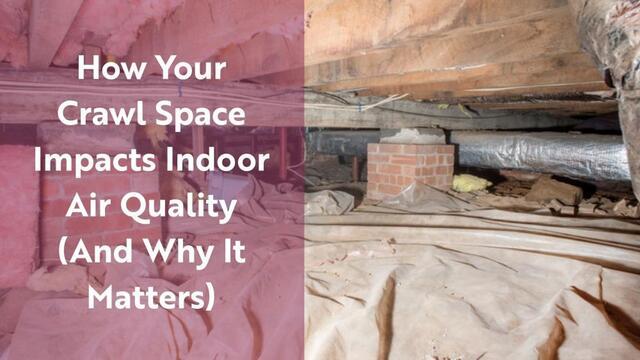
When you think about air pollution, what comes to mind? Vehicle emissions? Industrial plants? Maybe even agriculture?
While those are all major contributors to outdoor pollution, many homeowners overlook a critical factor much closer to home: indoor air quality.
If your home has a crawl space, this is especially important.
Here's why: studies show that up to 60% of the air inside your home can originate from your crawl space. Combine that with the fact that Americans spend roughly 90% of their time indoors, and it becomes clear that what's happening below your home directly impacts the air you breathe every day.
At Woodford Bros., Inc., we frequently hear questions about crawl spaces, air quality, and how the two are connected. In this guide, we'll walk through what indoor air quality is, how crawl spaces affect it, and what you can do to protect your home and your health.
What Is Indoor Air Quality?
Indoor air quality (IAQ) refers to the condition of the air inside your home, including the presence of pollutants, allergens, and moisture levels. Common indoor air contaminants include:
- Particulate matter: Dust, pet dander, and other microscopic particles
- Volatile organic compounds (VOCs): Gases released from paints, cleaners, and building materials
- Mold and mildew: Thrive in damp environments and release airborne spores
- Carbon monoxide (CO): A dangerous, odorless gas produced by fuel-burning appliances
- Radon gas: A naturally occurring radioactive gas that can enter through the soil beneath your home.
How Poor Air Quality Affects Your Health
Occasional exposure to airborne pollutants isn't unusual, but long-term exposure inside your home can lead to serious health concerns.
Poor indoor air quality has been linked to:
- Respiratory issues
- Headaches and fatigue
- Skin irritation
- Heart disease
- Increased risk of lung cancer
When pollutants are continuously present, they don't just linger; they circulate throughout your home.
The Crawl Space Connection
Your crawl space plays a much bigger role in indoor air quality than most homeowners realize.
1) Air Movement (The Stack Effect)
Air naturally moves upward through your home in a process known as the stack effect. As warm air rises and exits through the upper levels, it pulls new air in from below, including your crawl space.
If that air contains moisture, mold spores, or allergens, those contaminants are drawn directly into your living space.
2) Moisture and Humidity
Many crawl spaces have exposed dirt floors that release moisture into the air. This added humidity creates ideal conditions for:
- Mold growth
- Dust mites
- Pest activity
All of which contribute to poor air quality.
3) Poor sealing and insulation
An unsealed or poorly insulated crawl space allows outside air and moisture to enter freely. When warm, humid air meets cooler surfaces, condensation forms, leading to mold and further air quality issues.
Signs of Poor Indoor Air Quality
You don't always need specialized equipment to identify a problem. Some common indicators include:
- Musty or damp odors
- Visible mold or mildew
- Excess humidity or condensation
You can also use simple tools like:
- Hygrometers to measure indoor humidity levels
- Radon test kids or monitors to detect elevated radon levels
How to Improve Indoor Air Quality
If your crawl space is contributing to poor air quality, there are effective solutions available
Upgrade Air Filtration
High-quality air filters can capture smaller particles that standard filters might miss.
Crawl Space Encapsulation
Encapsulation is one of the most effective ways to protect your home. This process involves sealing the crawl space with a durable vapor barrier to:
- Reduce moisture
- Prevent mold growth
- Block outside air and pests
- Improve overall air quality
Install a Dehumidifier
A crawl space dehumidifier helps regulate moisture levels, preventing conditions that lead to mold and allergens.
Radon Mitigation
If radon is present, a depressurization system can safely vent the gas outside, preventing it from entering your home.
Don't Ignore the Signs
Indoor air quality issues won't resolve on their own, and over time, they often worsen. If you suspect your crawl space is affecting the air in your home, addressing the problem early can protect both your property and your health.
At Woodford Bros., Inc., we specialize in crawl space solutions designed to improve indoor air quality and create a healthier home environment. From encapsulation to moisture control, our team is here to help you find the right solution.
